A Kitchen Based Company Day With Real Workplace Lessons
- Business
William Castro
- 0
- 7 minutes read
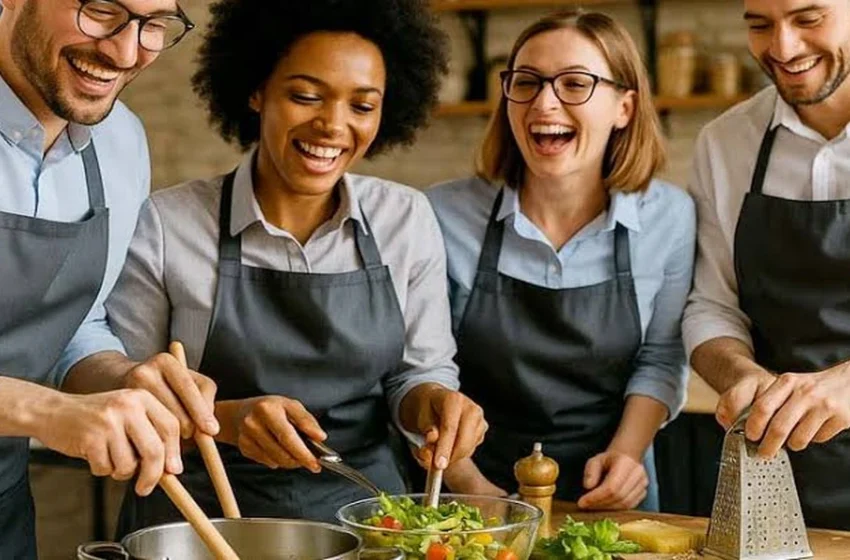
Cooking gives colleagues a shared task that is easy to understand and difficult to complete without cooperation. People must agree on priorities, divide responsibilities, monitor time, and respond when the food behaves differently from the plan. The activity can reveal workplace habits without copying an office meeting.
| Decision | Why it matters | Useful approach |
|---|---|---|
| Business aim | Controls the format | Pick one behaviour to practise |
| Group size | Affects participation | Use teams of four to six |
| Menu | Sets task difficulty | Choose achievable linked dishes |
| Dietary needs | Protects inclusion and safety | Collect details in advance |
| Facilitation | Connects cooking with work | Ask short reflective questions |
| Follow up | Carries learning back | Agree on one team action |
Define the purpose before choosing recipes
A social day and a development session are not the same. Both can include cooking, but the facilitator needs to know whether the priority is connection, communication, leadership, or cooperation across departments.
A narrow purpose gives the event direction. If the team needs clearer handovers, recipes can require one group to prepare ingredients that another group cooks. If inclusion is the priority, the format can rotate responsibility and invite several forms of contribution.
Use group size to prevent spectators
Four to six people per station usually creates enough work for everyone. With ten people around one grill, confident cooks may take control while others watch. More stations and simpler dishes are often preferable to fewer complex stations.
Roles do not have to copy job titles. A manager can handle preparation while a newer colleague manages timing. That change gives participants room to notice skills that normal hierarchy may hide.
Choose food that supports the task
Recipes should be achievable within the available time. A difficult dish can turn the facilitator into the real cook, which removes the group’s ownership. The menu should still include enough dependencies to require communication.
For a team building cucina milano event, Italian ingredients and barbecue methods can create linked tasks across bread, vegetables, sauces, protein, and dessert. Each station contributes to one meal, so no group succeeds alone.
Plan inclusion before invitations go out
Ask about allergies, religious requirements, vegetarian or vegan diets, mobility, and sensory needs. Do not wait until participants arrive. The provider needs time to adjust ingredients, equipment, work surfaces, and roles.
Someone who cannot stand for long may manage the recipe plan or seasoning from a seated station. A colleague who does not handle meat can work on vegetables, bread, or dessert without being separated from the team objective.
Treat safety as part of good organisation
Knives, hot surfaces, charcoal, and raw food require supervision. The briefing should cover tool use, handwashing, cross contamination, fire boundaries, and the route around cooking stations.
Alcohol should not be central while people are using heat and sharp tools. Plenty of water, shade, and breaks matter during warm weather. An outdoor provider also needs a safe plan for rain and wind.
Guide without taking over
The facilitator’s questions can make working habits visible. Who has the full picture. Which task is blocking another. Has the group checked that everyone understands the plan. These prompts help participants examine their process while retaining responsibility.
Intervention is necessary for safety, but not every minor mistake needs correction. A forgotten ingredient or uneven schedule gives the group information. Recovery can teach more than perfect execution.
The provider should brief company leaders before the event. Managers need to know whether they are participants, observers, or part of the review. Unclear roles can make colleagues cautious, especially if they think every decision is being assessed.
Share the meal and review the process
Eating together provides a natural close to the practical task. The review should happen while events are easy to remember. Ask groups to describe one action that helped and one that caused delay.
Avoid generic praise. Specific observations are more useful. A colleague may have restated instructions when confusion appeared, or one group may have warned another that equipment would be late. Those examples translate readily into office behaviour.
Food quality still matters because participants need a credible task. However, judging should not depend only on appearance. Teams can discuss planning, hygiene, use of resources, and communication as well as taste. That approach gives people with different skills more ways to contribute.
Carry one action back to work
The event has limited effect if Monday continues as before. Each group should choose one action they can test during normal work. It might be a two minute ownership check at the start of a project or an earlier handover between departments.
Assign a date for a brief review. The team can ask whether the action helped and revise it if necessary. This keeps the commitment practical and avoids turning the day into a list of vague ambitions.
The review does not need another event. Ten minutes in a normal team meeting may be enough. Ask for one example of the new behaviour, one obstacle, and one adjustment to try next.
Is a kitchen activity worth company time?
Yes, when it addresses a real team need and ends with a usable workplace action. The cooking creates immediate feedback, the shared meal builds connection, and a focused review turns what happened into behaviour colleagues can apply after they return to work.
