Noise Barriers in Singapore: How Usage Differs Across Project Types
- Construction
Paul Watson
- 0
- 9 minutes read
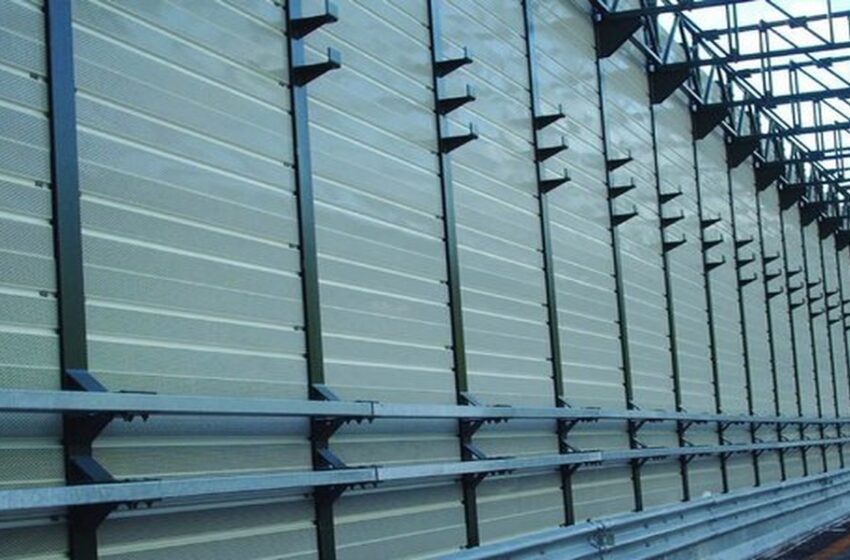
Walk around Singapore for a bit, and you’ll start to notice a pattern-construction sites are everywhere, but they don’t all feel the same.
Some are tightly sealed off with continuous panels. Others look more open, with sections that seem to shift depending on what’s happening that week.
That difference usually isn’t random. It comes down to the type of project and what the site is dealing with day to day.
Because in practice, noise barriers in Singapore aren’t applied in a fixed way. They’re adapted based on the environment, the kind of work involved, and how sensitive the surrounding area is.
And once you start looking at it that way, the variations start to make a lot more sense.
Residential projects: where consistency matters more than anything.
When a construction site sits right next to homes, everything feels closer and louder.
Even normal construction noise can feel disruptive when it’s happening just a few metres away from where people live, rest, or work from home.
So for residential projects, the approach tends to be more cautious and consistent.
With noise barriers, you’ll often notice:
- More complete coverage around the entire site
- Fewer visible gaps or openings
- Reinforced sections facing directly toward housing blocks
It’s not just about reducing noise-it’s about avoiding sudden spikes or changes in sound levels.
Because from a resident’s perspective, unpredictability can be just as frustrating as loudness.
So the setup here is usually designed to feel steady and controlled throughout the day, even as work continues inside.
Commercial projects: not just about noise, but movement too.
Now compare that to a site near offices, malls, or retail areas.
People are still affected by noise, but the environment is more dynamic. There’s constant movement-employees going in and out, deliveries happening, pedestrians passing by.
So the challenge becomes slightly different.
Instead of sealing everything off completely, contractors need to strike a balance.
With construction noise barriers in Singapore, you’ll often see:
- Openings for access points that still maintain partial coverage
- Barriers integrated with hoarding for both safety and sound control
- More attention given to areas with heavy foot traffic
In other words, it’s not just about blocking noise-it’s about doing it without disrupting how people move around the space.
That balancing act is what makes commercial setups look a bit more “open,” even though noise control is still very much in place.
Infrastructure projects: everything is constantly moving.
Infrastructure projects are a completely different kind of challenge.
Unlike building construction, these projects aren’t always confined to one clearly defined site. Think roadworks, MRT expansions, drainage upgrades-they stretch across long distances.
And more importantly, they move.
One section might be active this week, while another becomes active next week.
So instead of a fixed perimeter, noise barriers for infrastructure projects are often:
- Modular and easy to relocate
- Installed only around active work zones
- Adjusted frequently as the project progresses
You might even notice barriers appearing and disappearing along a road over time.
That’s not inconsistency-it’s intentional. The goal is to follow the noise, not lock everything into one static setup.
Industrial projects: less about distance, more about intensity.
Industrial construction sites can sometimes be located further from residential areas, but that doesn’t automatically make noise control easier.
In fact, these sites often involve heavier, more intense operations.
We’re talking about:
- Large-scale machinery
- Continuous operations
- High-impact processes
So even if fewer people are directly nearby, the noise itself can be stronger.
That’s why noise barrier systems for industrial projects tend to focus more on:
- Controlling specific high-noise equipment
- Reinforcing key areas rather than the entire site
- Using thicker or layered materials where needed
It’s a slightly different mindset.
Instead of covering everything, the goal is to manage the most intense sources effectively.
Mixed-use developments: where everything overlaps.
Then you have mixed-use projects, which are probably the most complex to manage.
These are the sites where:
- Residential units are nearby
- Commercial spaces are active
- Public access is still ongoing
So instead of one clear priority, there are multiple expectations happening at the same time.
In these cases, contractors usually combine different approaches:
- Stronger coverage facing residential zones
- Flexible access points for commercial areas
- Localised control for specific noisy activities
This creates a more layered setup.
One side of the site might look heavily enclosed, while another side is more open and adaptable.
That’s not inconsistency-it’s targeted planning based on who’s affected in each direction.
Why no two setups look the same.
At first glance, it might seem like construction sites should follow a standard setup.
But once you consider all the variables, that idea doesn’t really hold up.
Each project is shaped by:
- Its surroundings
- The type of work being done
- The level of public sensitivity
- How the site evolves over time
So even if two projects use similar materials, the way they’re installed can look completely different.
That’s why noise barriers in Singapore vary so much in appearance and configuration.
It’s not just installation-it’s ongoing adjustment.
Another thing that’s easy to miss is that these setups don’t stay fixed.
As projects move forward:
- Work zones shift
- Noise levels change
- Certain areas become more or less sensitive
So barriers are often:
- Repositioned
- Reinforced
- Reduced or removed in certain sections
It’s a continuous process.
The system adapts as the site changes, rather than staying locked into its original layout.
Final Thoughts
In Singapore, noise control is shaped as much by the project type as it is by the materials used.
A noise barrier is not applied the same way across every site because every site has different demands. Some need full coverage and consistency. Others need flexibility and access. Some deal with proximity, while others deal with intensity.
And that’s really the key idea.
Effective noise control isn’t about applying one standard setup everywhere-it’s about adjusting the approach so it fits the specific conditions of each project. That’s why no two sites look exactly the same and why that variation actually makes sense once you understand what’s driving it.
